
566 BC The ancient arts olympiad
In 566 BC, two centuries after the first Olympic Games, Athens founded the arts olympiads: a festival held every four years, in the third year after each sporting olympiad. It was the first arts olympiad: an olympiad offset from the sporting games and devoted to art.
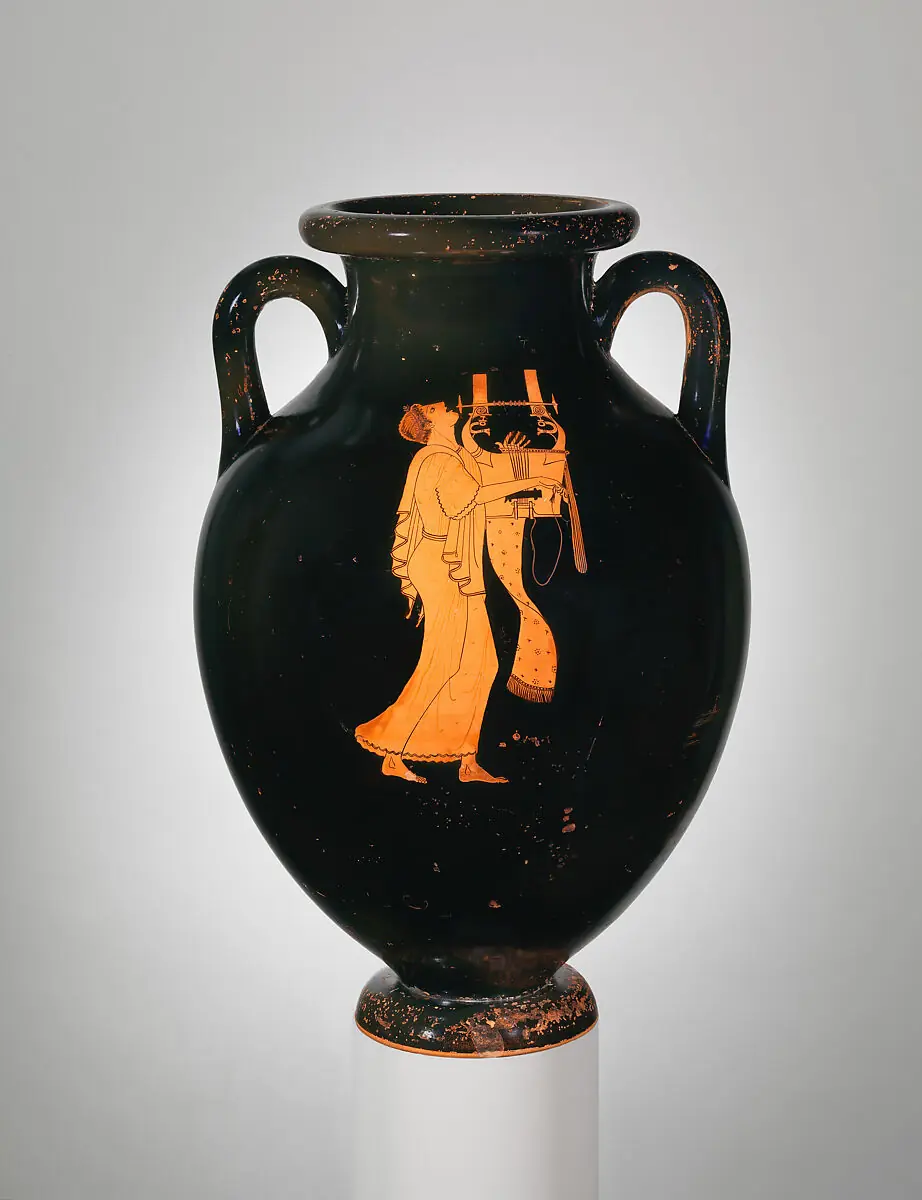 (enlarge image, opens in a new tab)
What the source says
“from 566/5 B.C., in Peisistratos’ time, a four-yearly festival (held in the 3rd year of each [sporting] Olympiad) was established, called the Great Panathenaia. […] Peisistratos […] added competitions for rhapsodoi (reciters of epic poetry)”
— Nicolaos Yalouris (ed.), The Eternal Olympics, 1979, p. 65. Yalouris was then director of the National Archaeological Museum in Athens.
The Great Panathenaia at a glance
- Place
- Athens
- Founded
- 566/5 BC, under Peisistratos, two centuries after the first sporting olympiad in 776 BC
- Artistic contests
- Recitation of Homer’s poems by rhapsodes; lyric poetry sung to the kithara or the aulos
Facts at the origin of the modern Olympic Arts, created by their founder, Marc Verrière
The ancient Greeks deliberately held this olympiad at a different time from the Games at Olympia: art and sport each had their own time. This offset calendar lies at the very heart of the modern Olympic Arts: the full legitimacy of this historic initiative rests on respecting it. That is why the founding Charter of 1995 places them “the third year after each sporting Olympiad”
.
The most recent Olympic Games, held in Paris in 2024, therefore justify the choice of 2027 for the first arts olympiad.
Sources
- Nicolaos Yalouris (ed.), The Eternal Olympics: The Art and History of Sport, introduction by Manolis Andronicos, Caratzas Brothers, 1979, p. 9 (first olympiad, 776 BC) and pp. 64-65, ISBN 0-89241-092-2. Record of the book on archive.org (external site, opens in a new tab).